A Low Voltage Induction Motor converts electrical energy into mechanical motion through electromagnetic induction. It usually operates below 1,000 volts, although exact limits depend on regional standards and equipment design. You will find these motors driving pumps, fans, compressors, conveyors, and machine tools. Their plain construction makes them practical for factories, commercial buildings, and water-treatment facilities.
Stephen J. Chapman, a respected electric-machinery author, writes, “The induction motor is the most commonly used motor in the world.” That statement reflects years of industrial experience, but popularity alone does not guarantee the right selection. Engineers still examine rated voltage, frequency, load torque, starting current, efficiency class, enclosure, and duty cycle. A motor beside a dusty conveyor needs different protection from one operating near cooling water.
The article explains how a Low Voltage Induction Motor works, including its stator, rotor, rotating magnetic field, and slip. It also discusses squirrel-cage and wound-rotor designs, starting methods, speed control, maintenance, and common faults. Listen for bearing noise. Check terminal temperatures. Inspect vibration trends before failure becomes obvious.
There is no perfect motor choice.
A smaller motor may overheat under constant load. An oversized motor may waste energy and cost more to operate. Real installations also contain imperfect alignment, voltage imbalance, and neglected maintenance. Understanding these limitations helps readers evaluate specifications more carefully and choose equipment that performs reliably in actual working conditions.
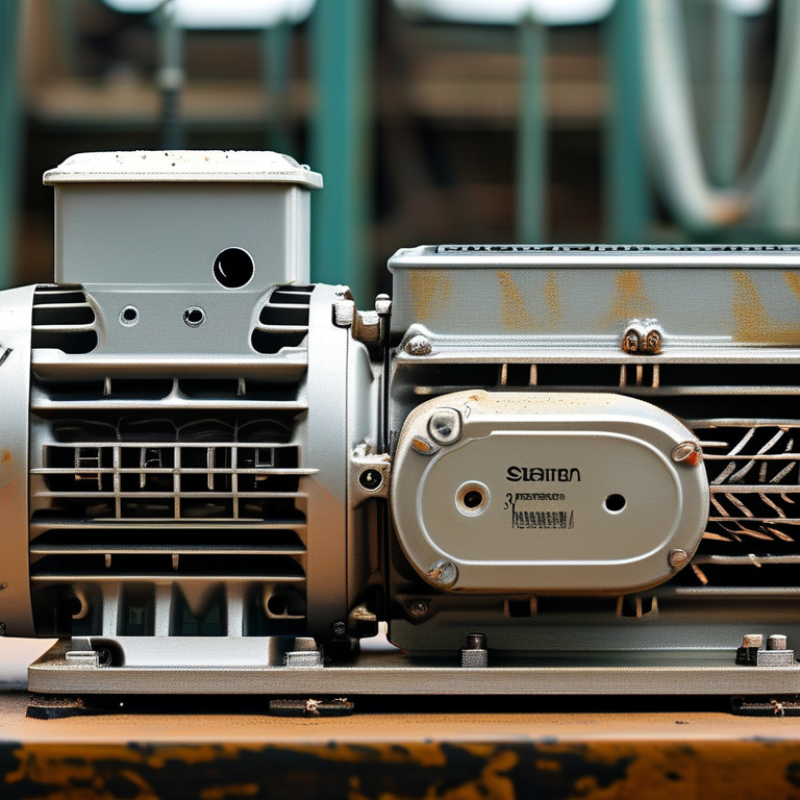
What Is a Low Voltage Induction Motor?
Definition and Basic Operating Principle of a Low Voltage Induction Motor
A low voltage induction motor is an AC machine designed to operate at commonly used supply voltages below 1,000 volts. The exact boundary varies among standards. In industrial practice, many examples use three-phase power, although smaller versions may use single-phase supplies. It converts electrical energy into mechanical rotation without brushes or a direct electrical connection to the rotor. It is not a transformer.
When alternating current enters the stator windings, it produces a rotating magnetic field inside the laminated iron core. That field cuts across the rotor conductors and induces current in them. The induced current creates rotor torque, causing the shaft to turn in the field’s direction. The rotor follows, but never catches the rotating field. This speed difference is called slip. Slip is essential. Without it, induction would disappear and torque would fall away.
A squirrel-cage rotor uses conductive bars joined by end rings, making the assembly strong and relatively easy to maintain. The motor may draw a sharp current surge during startup, so protection and cable sizing deserve careful attention. During maintenance, technicians check bearing noise, vibration, airflow, terminal tightness, and insulation condition before blaming the motor itself. Temperature deserves equal attention because heat shortens insulation life. The basic explanation sounds neat, but field conditions are less tidy. Poor alignment, overloaded shafts, or frequent starts can change performance significantly. Measurement matters more than assumption.
| Data Dimension | Typical Information | Description |
|---|---|---|
| Definition | AC motor operating at low-voltage supply levels | A low voltage induction motor converts three-phase or single-phase alternating electrical energy into mechanical rotation through electromagnetic induction. |
| Common Voltage Range | Up to 1,000 V AC | In many industrial standards, equipment rated up to 1,000 V AC is classified as low voltage. Actual motor ratings commonly include 230 V, 400 V, 460 V, and 690 V systems. |
| Motor Type | Usually squirrel-cage induction motor | The squirrel-cage rotor has conductive bars short-circuited by end rings and does not require brushes or slip rings. |
| Primary Energy Conversion | Electrical energy to mechanical energy | The stator receives AC power, creates a rotating magnetic field, and induces current in the rotor to produce torque. |
| Basic Operating Principle | Electromagnetic induction | The rotating stator field cuts across the rotor conductors, inducing rotor current. The interaction between the field and rotor current generates electromagnetic torque. |
| Synchronous Speed | Ns = 120f / P | Synchronous speed depends on supply frequency f in hertz and the number of stator poles P. At 50 Hz, a two-pole motor has a synchronous speed of 3,000 rpm. |
| Rotor Speed | Slightly below synchronous speed | The rotor must rotate below the rotating magnetic field speed to maintain induction and produce torque. |
| Slip | s = (Ns − Nr) / Ns | Slip is the relative speed difference between the rotating magnetic field and the rotor. It is necessary for rotor current and torque production. |
| Supply Frequency | 50 Hz or 60 Hz | The supply frequency directly affects synchronous speed and must match the motor design or be controlled by a suitable variable-frequency drive. |
| Common Phase Configuration | Three-phase | Three-phase motors provide a naturally rotating magnetic field, smooth torque, and good efficiency for industrial applications. |
| Typical Power Range | Fractional kilowatt to several megawatts | Low-voltage induction motors are available in many sizes, from small equipment motors to large industrial motors. The available range depends on voltage, cooling, enclosure, and application requirements. |
| Starting Current | Approximately 5–8 times rated current for direct-on-line starting | The exact value depends on motor design and load. Star-delta starters, soft starters, or variable-frequency drives can reduce starting current. |
| Efficiency | Typically about 80% to 97% | Efficiency varies with motor size, speed, load, design class, and efficiency standard. Larger motors generally achieve higher efficiency than small motors. |
| Power Factor | Commonly about 0.75–0.95 at rated load | Induction motors draw magnetizing current, so their power factor is lagging and usually decreases when the motor operates significantly below rated load. |
| Cooling Method | Fan-cooled or enclosed fan-cooled | A shaft-mounted or separately powered fan commonly removes heat from the frame and helps maintain the winding temperature within its design limit. |
| Main Components | Stator, rotor, shaft, bearings, frame, fan, and terminal box | The stator produces the magnetic field, while the rotor and shaft deliver mechanical torque to the driven equipment. |
| Common Applications | Pumps, fans, compressors, conveyors, mixers, and machine tools | These motors are widely used because they are robust, relatively simple, economical to maintain, and suitable for constant-speed or variable-speed operation. |
| Key Advantages | Simple construction, reliable operation, low maintenance, and good durability | The absence of brushes and commutators in a squirrel-cage design reduces wear and simplifies routine maintenance. |
| Important Limitations | High starting current and lagging power factor | Starting equipment may be required for large motors or weak electrical networks, while speed control generally requires a variable-frequency drive. |
: It converts electrical energy into rotating mechanical power. A narrow air gap separates the rotor and stator.
The stator contains laminated steel and insulated copper windings. The rotor usually has conductive bars and end rings. A steel shaft transfers torque. Bearings support it.
Alternating current creates a rotating magnetic field in the stator. This field induces current in the rotor bars. The interaction produces torque.
Industrial low voltage usually means below 1,000 volts AC. Common ratings include 230/400 volts and 400/690 volts. The rating must match the supply system.
They drive pumps, fans, compressors, conveyors, and mixers. Commercial buildings may use them for ventilation and cooling equipment. Small models can operate workshop machines.
Check voltage, speed, torque, duty cycle, enclosure, and ambient temperature. A conveyor may need stronger starting torque than a ventilation fan. The best specification can still be wrong.
It can adjust speed and reduce energy use during partial-load operation. Incorrect settings may cause overheating, noise, or unstable torque. The drive needs careful setup.
They can measure winding resistance, current, vibration, and temperature. They should also check bearings, airflow, terminals, and grounding points. A clean exterior proves little.
Even slight misalignment can increase vibration and noise. It may also accelerate bearing wear and heat buildup. Small clearances matter.
Higher efficiency can reduce heat and operating costs during long duty cycles. However, an efficient motor may waste potential when lightly loaded. Actual measurements deserve more trust.
A Low Voltage Induction Motor is an AC electric motor designed to operate within a relatively low voltage range while converting electrical energy into mechanical rotation. It works through electromagnetic induction: alternating current creates a rotating magnetic field in the stator, which induces current in the rotor and produces torque. Its main components include the stator core and windings, rotor, shaft, bearings, frame, cooling fan, terminal box, and protective enclosure. Depending on its voltage rating and construction, it may be designed as a squirrel-cage or wound-rotor motor, with performance features such as efficiency, starting torque, speed stability, insulation strength, and overload capability.
These motors are widely used in pumps, fans, compressors, conveyors, machine tools, ventilation systems, and other industrial or commercial equipment. Proper selection should consider load requirements, rated power, voltage, frequency, speed, duty cycle, environmental conditions, and starting method. Correct installation requires secure mounting, suitable wiring, grounding, alignment, and adequate ventilation. Regular maintenance, including inspection, cleaning, lubrication, vibration monitoring, and electrical testing, helps extend service life. Operators should always follow safety procedures, isolate power before servicing, and use appropriate protective equipment.

 NANFANG